
Boston cleanout guide
A sorting checklist for a garage cleanout in Boston
A garage usually contains several different kinds of unwanted material. Sort household belongings separately from fuel, paint, batteries, and other products before choosing a collection route.
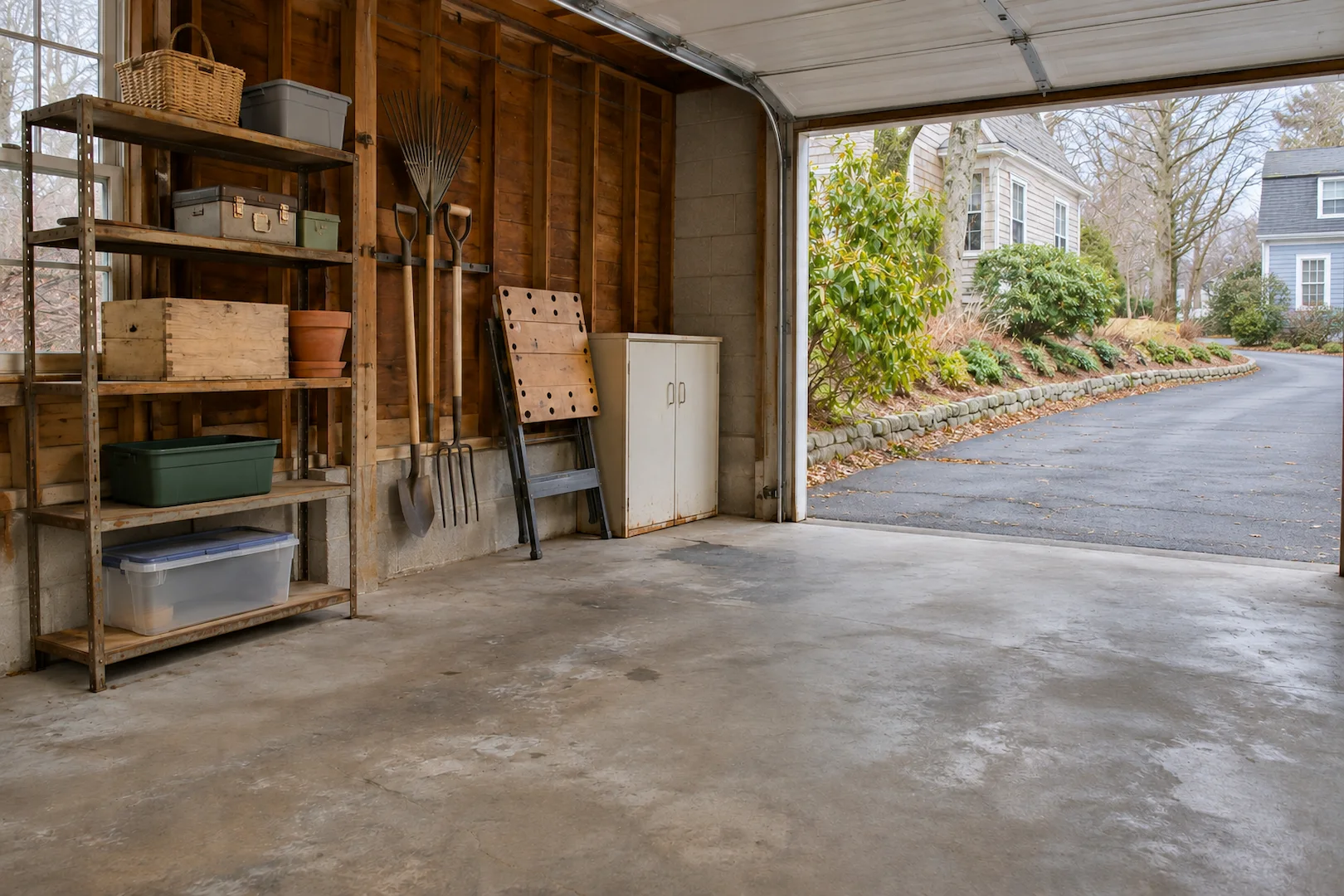
Create three working zones
Begin with keep, ordinary removal, and items needing a separate decision. Place the zones where they do not block the garage door or the route into the house. If space is tight, use a list and photographs rather than moving everything at once.
Decide what the garage needs to accommodate when the job is finished. That might be a vehicle, a workbench, or access to storage shelves. The desired end point helps you judge which large items are worth keeping without turning the cleanout into an open-ended organizing project.
Check ownership before adding anything to the removal group. Borrowed tools, a neighbor’s ladder, or a family member’s stored boxes need an answer from the owner. Keep unresolved items out of the load.
Take a wide photograph of each zone. If you later ask for garage cleanout help, those views show both the quantity and the available loading access.
Inspect shelves for products that do not belong in the load
| What you find | Planning step |
|---|---|
| Paint, pesticides, or cleaners | Read the label and check the appropriate household-product route |
| Fuel, oil, or an unidentified liquid | Keep it separate and ask the relevant collection program |
| Loose or device batteries | Identify the type and check a battery collection route |
| Propane cylinder | Ask about a cylinder return or collection arrangement |
| Ordinary furniture or shelving | Assess reuse, removal scope, and access |
Massachusetts’ household hazardous-product guide is a useful starting point. Do not open unknown containers, mix leftovers, or drain equipment as a shortcut to putting it in an ordinary removal pile.
Boston’s Zero Waste Day page lists current resident-event rules. Check acceptance and limits before transporting anything. Those events should not be assumed to accept commercial waste or every product found in a garage.
Make reuse decisions before arranging transport
Working hand tools, a usable cabinet, or sound shelving may have a reuse route. Confirm the recipient’s acceptance before treating the item as donated. A tool that is missing a guard or does not work needs an honest description.
Greater Boston ReStore publishes examples of tools and household items it considers. Its current list and staff decision matter more than a general assumption that charities take anything useful. Transport and pickup charges, if any, are a separate arrangement.
For items headed for removal, record whether shelving or a workbench is freestanding or attached. Do not assume removal includes taking apart an installed structure. If dismantling is needed, have that included in the scope before work begins.
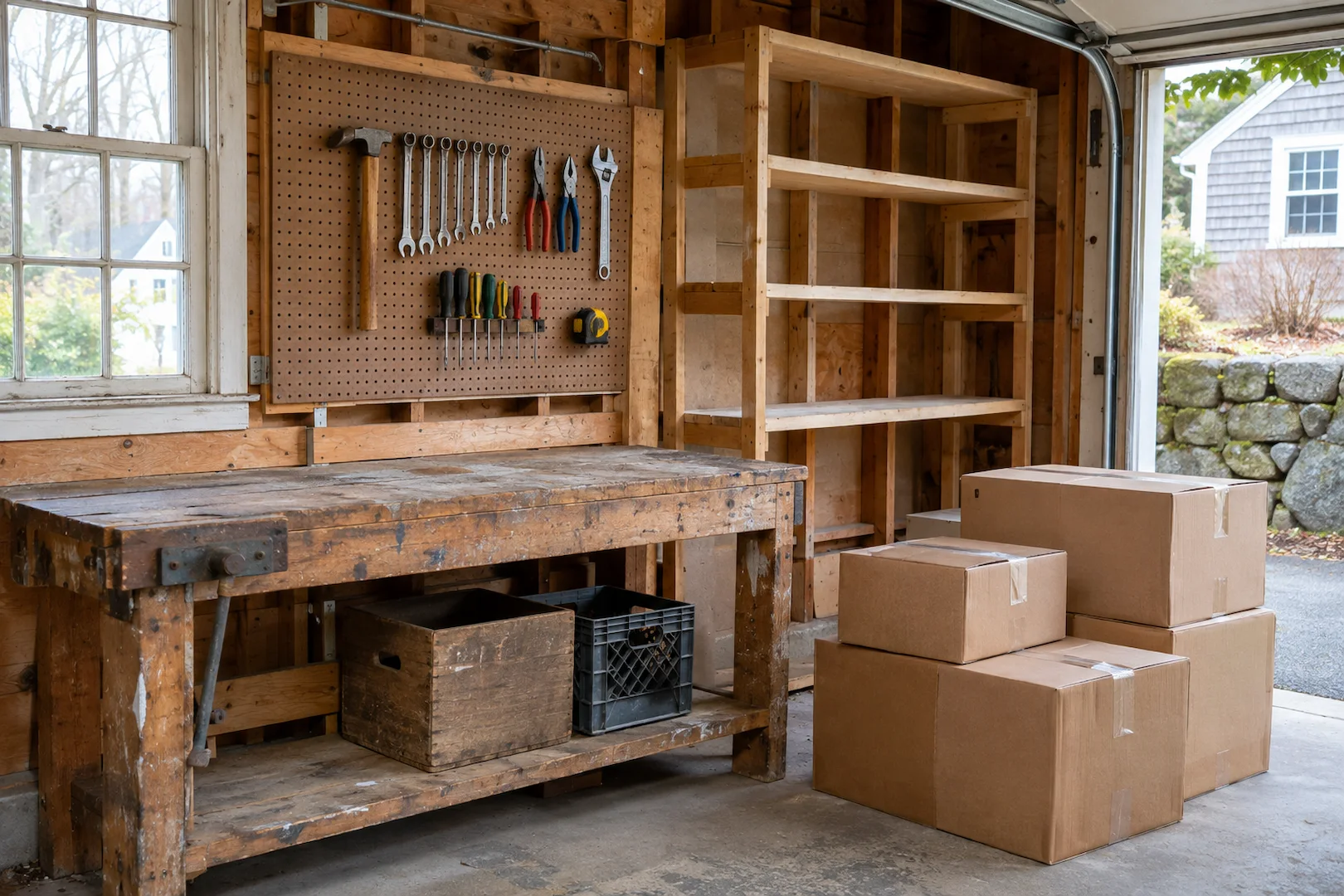
Prepare the loading route and check the result
Tell the provider about driveway width, overhead clearance, gates, and the distance from the garage to the loading point. Keep the route free of personal belongings. If an item is too heavy or awkward to move safely, leave it in place and photograph it.
Send Brickline the approved removal list, a few wide photos, and the separate-product questions already identified. Include the items that stay so the intended result is clear. The request can then be reviewed without assuming the whole garage is one accepted load.
After collection, inspect the corners, shelves, and floor edges. Check that anything left in the special-handling group still has a confirmed next step. A garage can look clear while a few forgotten cans or batteries remain on a high shelf.
Keep the final arrangement practical: clear access to doors and household equipment, a defined place for tools you use, and no undecided pile blocking the space you wanted back.
Sources & further reading
Municipal programs and accepted materials can change. Check the linked program before making arrangements.

A little more room starts here
What would you like to clear?
A single item or several rooms. Tell us what you have, where it is, and when you need the space.
Photos help us understand the load. Mention stairs, elevators, and parking so we can plan the pickup with you.
(617) 399-3379Every day · 9am–7pmTiming depends on availability, access, and the items involved. For a request today, please call.