
Boston cleanout guide
What to sort before a basement cleanout in Boston
Start a basement cleanout by checking the stairs, deciding which belongings can leave, and setting aside materials that need separate handling.
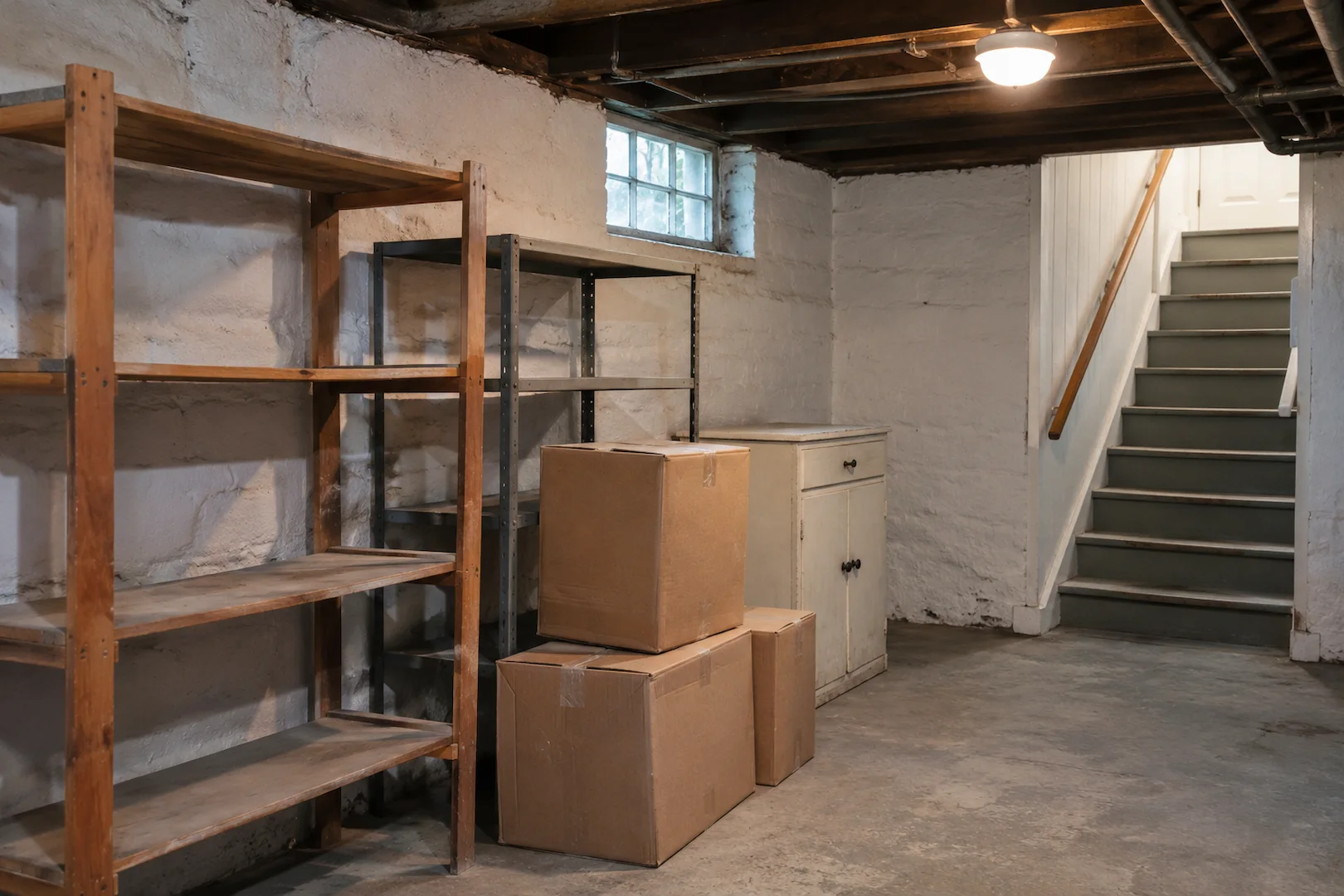
Look at the way out before sorting the contents
Walk the route from the basement to the loading point. Notice the ceiling height, stair width, turns, handrail, doors, and any bulkhead entrance. Photograph the tightest points. A small cabinet can be difficult to remove if the turn at the top of the stairs is narrow.
Keep the route clear while sorting. Do not move every box to the bottom of the staircase, where it may block the only usable exit. Work in manageable groups and leave personal belongings that are staying in a clearly separated area.
If carrying an item is uncertain, leave it in place and describe the problem. A removal provider can assess the route from accurate photographs more usefully than from an item already wedged in a doorway.
Check the small contents before approving the large pieces
Open drawers and ordinary storage boxes carefully enough to identify their contents. Set aside documents, photographs, keys, and valuables. A filing cabinet that appears unwanted may still contain material someone needs to review.
For a family property, establish who can approve removal. Keep disputed or undecided items separate. If the work is part of an estate cleanout, follow the authorized decisions rather than making new ones during loading.
Use an item list with locations. “Metal shelf beside the stairs” is easier to identify than “old shelving,” particularly when some units are staying. Wide photos help show the full removal group.
Give old products their own disposal plan
Basements often hold forgotten maintenance products alongside household belongings. Check for paint, batteries, lamps, cleaners, and unidentified containers without opening or mixing them. Record what the label says and keep the products out of the ordinary furniture pile.
Massachusetts provides household hazardous-product guidance for appropriate collection routes. If you cannot identify a product, ask the relevant program for advice rather than assuming it is harmless because it has been stored for years.
Tell a removal provider about these items before the appointment. A general basement cleanout should not be taken to include chemicals or other restricted materials. The load can be reviewed more accurately when those questions are settled in advance.
Loose belongings are different from suspect building materials
Do not pull away old insulation, flooring, wall panels, or pipe covering as part of an ordinary belongings cleanout. If a material may require specialist assessment, pause that part of the work. Its appearance alone is not a reliable basis for deciding how it can be removed.
MassDEP’s asbestos and construction guidance explains the separate regulated process. A household junk-removal request does not replace that assessment or authorize abatement.
The same scope distinction matters when a basement has water, sewage, or extensive mold damage. Describe the conditions before arranging a visit and obtain the appropriate specialist help. Do not present a damaged space as an ordinary dry furniture collection.
Agree on the removal group and the end point
Once the decisions are made, identify the furniture, shelves, boxes, and other accepted belongings that should leave. State whether anything is attached to the building or needs a separate task. Ask what preparation is required before collection.
- Current item photos and an approximate count
- Stairs, headroom, doors, and outside access
- Items that must stay
- Products or materials needing a separate route
- Your preferred date and any building restrictions
For basement cleanout help in Boston, Brickline can review those details and discuss how the approved items will be carried out. After the work, check the floor edges, storage corners, and route out so no approved items have been missed.
Sources & further reading
Municipal programs and accepted materials can change. Check the linked program before making arrangements.


A little more room starts here
What would you like to clear?
A single item or several rooms. Tell us what you have, where it is, and when you need the space.
Photos help us understand the load. Mention stairs, elevators, and parking so we can plan the pickup with you.
(617) 399-3379Every day · 9am–7pmTiming depends on availability, access, and the items involved. For a request today, please call.