
Massachusetts material guide
Drywall disposal and recycling in Massachusetts
Clean gypsum wallboard and mixed demolition debris are not interchangeable descriptions. Identify the material and check the receiving requirements before planning a drywall load.
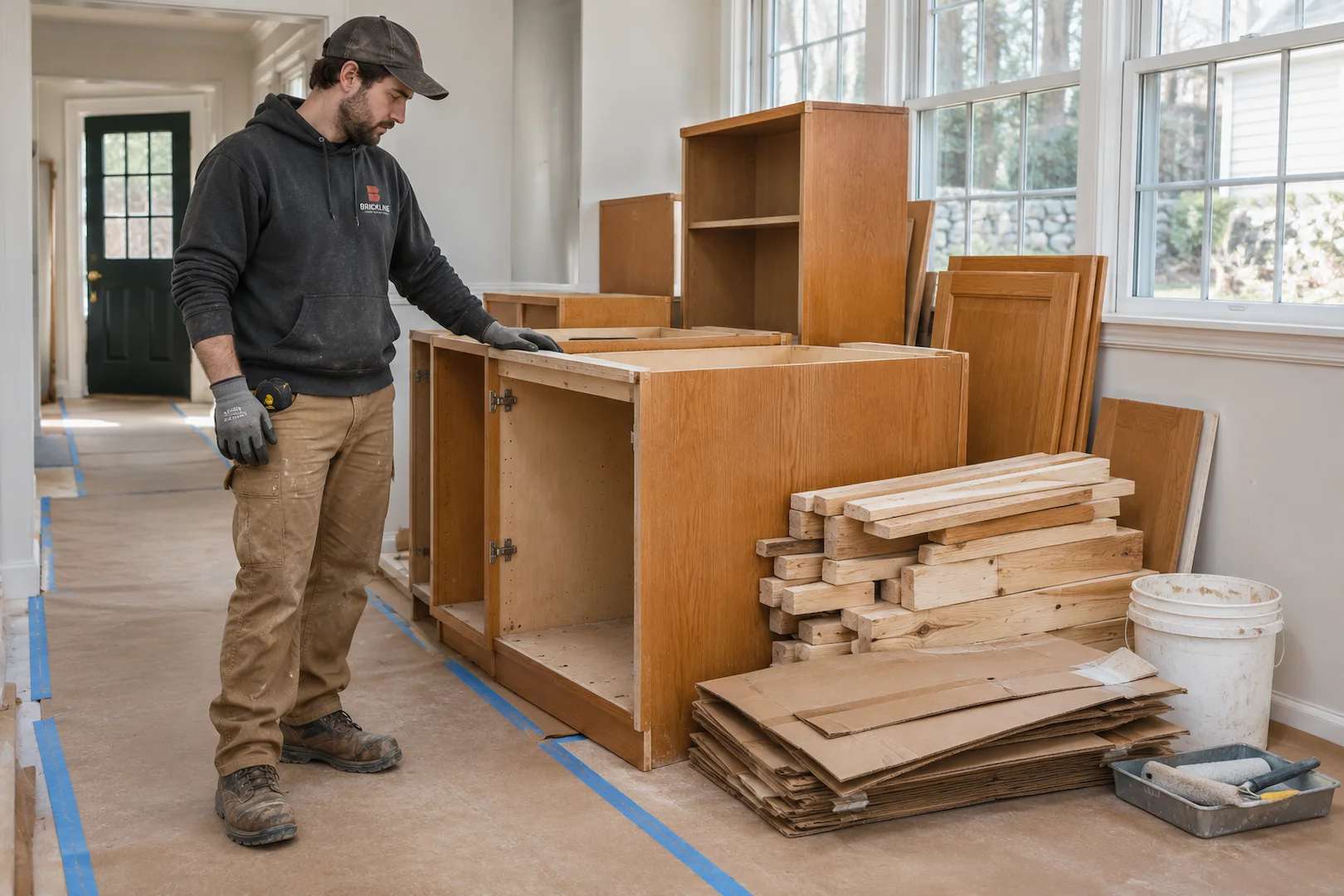
Use a material description the receiver can assess
Tell the receiving facility whether the load is new offcuts, removed wallboard, mixed wall debris, or something you cannot identify. Include photographs and describe any other materials attached or mixed in. Do not label a pile “clean drywall” simply because it is dry.
MassDEP’s construction and demolition guidance links to material-specific wallboard resources. Those details are a better starting point than a general statement that drywall is recyclable.
For an older building, the wall assembly may contain several layers and products. A photo can help describe the load, but it is not a substitute for identifying suspect material where specialist assessment is required.
Three loads can require three different conversations
| Load description | Question to ask |
|---|---|
| Unused wallboard or offcuts | Can the material be reused or accepted in a clean gypsum stream? |
| Wallboard removed during renovation | What condition and preparation does the receiver require? |
| Mixed or uncertain wall debris | What identification or assessment is needed before acceptance? |
The Massachusetts waste-ban list specifically names clean gypsum wallboard. Painted, layered, or contaminated wall material needs its own acceptance check.
Ask the receiver to explain its acceptance conditions before loading. That protects you from transporting material to a site that cannot take it and helps the removal provider plan where to take the load.
Keep uncertain material separate and avoid unnecessary disturbance
If a project reveals suspect insulation, old flooring, coatings, or another material needing assessment, stop treating that part of the project as an ordinary drywall load. Do not break it up just to fit a container or make it easier to carry.
MassDEP’s asbestos guidance covers a separate regulated process. Ordinary junk removal should not be used as a substitute for that work.
Once a facility or collection provider has agreed to accept the material, follow its preparation instructions. Keep the staging area controlled and the route through occupied space clear. Describe attached materials honestly instead of trying to make the load sound simpler than it is.
What to include in a drywall removal inquiry
Provide the material description, approximate quantity, photographs, location, floor level, and loading access. Say whether the work is complete or whether more debris will be added. Include any receiving-facility instructions already obtained.
For a renovation removal request, Brickline can review the ordinary debris scope once the material is identified. Do not include hazardous or unresolved suspect material in that request as though it were confirmed wallboard.
If reusable sheets remain, keep them out of the debris pile while you consider a reuse route. For the remainder, retain any collection or disposal information supplied with the job and check the project area after removal.
Sources & further reading
- MassDEP construction and demolition guidance
- MassDEP waste disposal bans
- MassDEP asbestos notifications
Municipal programs and accepted materials can change. Check the linked program before making arrangements.
A little more room starts here
What would you like to clear?
A single item or several rooms. Tell us what you have, where it is, and when you need the space.
Photos help us understand the load. Mention stairs, elevators, and parking so we can plan the pickup with you.
(617) 399-3379Every day · 9am–7pmTiming depends on availability, access, and the items involved. For a request today, please call.