
Boston cleanout guide
How to plan construction debris disposal in Boston
List the renovation materials and check where each can go. Separate reusable fixtures, ordinary construction waste, and anything requiring specialist assessment before arranging removal.
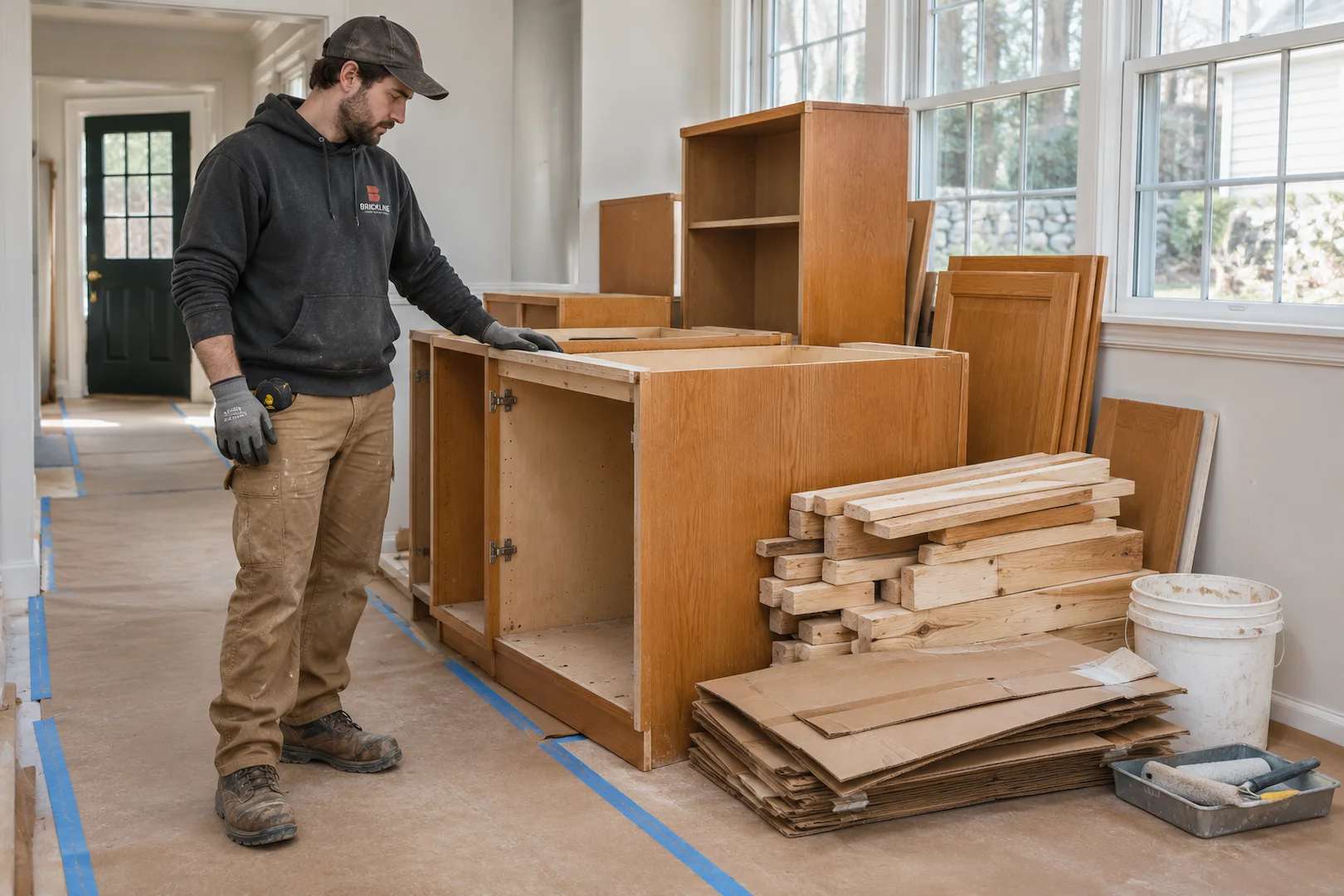
List the materials before choosing pickup or a container
Describe the actual project: removed cabinets, wood offcuts, drywall, tile, metal fixtures, or a mixture. Include approximate quantities and photographs. “A small renovation” says little about the weight, composition, or handling requirements of the load.
Note whether the debris is already separated and whether more material will be generated. A one-time collection at the end of a room update differs from a project that produces several loads over multiple weeks. The timing and staging space should match that work pattern.
MassDEP’s construction and demolition resources provide material-specific guidance. Use the relevant category rather than assuming every construction material can go to the same destination.
Decide on salvage while the items are still usable
Look at cabinets, doors, fixtures, and tools before demolition starts. If something may be reused, obtain a recipient’s acceptance and agree on the removal method while the item is intact. A useful cabinet can lose its reuse value when it is broken apart to make loading easier.
Keep accepted salvage separate from debris. Label the items and tell everyone working on the project which group is protected. Store the hardware with the relevant fixture where practical so it does not get lost in a mixed box.
Our renovation-material donation guide covers the acceptance and transport questions to settle. Donation remains a possible route, not a guaranteed destination for everything removed from a room.
Check the waste-ban materials in the project
Massachusetts’ waste-ban list includes several construction materials, such as metal, asphalt pavement, brick, concrete, and clean gypsum wallboard. Check the rules for each material before choosing a disposal destination; a mixed demolition load may need several arrangements.
Ask the receiving facility or collection provider what it accepts and how the load should be prepared. Tell it about mixed materials and contamination rather than describing a partly mixed pile as clean wood or clean wallboard.
Where practical, keep streams separate from the start. That makes the load easier to describe and avoids having to sort through a mixed pile after the project has finished.
Resolve suspect materials before ordinary removal
Do not disturb old insulation, coatings, flooring, or other suspect material merely to make a load easier to collect. If specialist assessment is needed, handle that question before the ordinary debris-removal appointment.
MassDEP has a separate asbestos and construction notification process. A general hauling request does not replace regulated assessment, abatement, or disposal arrangements.
Explain any uncertainty in the project description. Keep work involving hazardous or unidentified material outside the ordinary collection scope until the appropriate provider has addressed it.
Plan the collection point around the property
Describe where the material is stored, how far it is from the loading point, and whether stairs or narrow doors are involved. Keep occupied rooms and access routes usable. Do not place loose debris on a public sidewalk simply because a pickup is planned.
If a dumpster or equipment will occupy public space, check Boston’s street-occupancy guidance. Establish who is responsible for any required permission before the equipment arrives.
For staged work, agree on how additions to the load will be handled. An estimate based on cabinet removal may not cover a later pile of tile or masonry.
Ask for a quote that names the accepted materials
For renovation debris removal in Boston, send Brickline the material list, current photographs, access information, and project timing. Identify reusable items and specialist material separately.
Ask what loading work, accepted materials, and receiving arrangements are included. Keep relevant disposal or handoff records with the project paperwork. After collection, check the staging area and confirm that any excluded material still has its own agreed route.
Sources & further reading
- MassDEP construction and demolition guidance
- MassDEP waste disposal bans
- MassDEP asbestos notifications
- Boston street-occupancy permits
Municipal programs and accepted materials can change. Check the linked program before making arrangements.
A little more room starts here
What would you like to clear?
A single item or several rooms. Tell us what you have, where it is, and when you need the space.
Photos help us understand the load. Mention stairs, elevators, and parking so we can plan the pickup with you.
(617) 399-3379Every day · 9am–7pmTiming depends on availability, access, and the items involved. For a request today, please call.